🇧🇷 Learn Brazilian Portuguese with a Native Teacher
Want to speak Portuguese confidently? Book personalized online lessons and start learning today.
Difference Between Ser and Estar in Brazilian Portuguese
Difference Between Ser and Estar: Quick Answer
Both ser and estar mean to be in English. In Brazilian Portuguese, however, they are used in different contexts. As a general rule, use ser for identity and defining characteristics, and estar for temporary states, locations and emotions.
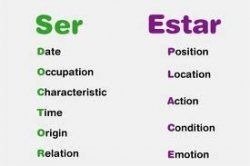
Difference Between Ser and Estar: The DOCTOR vs PLACE Method
SER = DOCTOR
- Date
- Occupation
- Characteristic
- Time
- Origin
- Relationship
ESTAR = PLACE
- Position
- Location
- Action
- Condition
- Emotion
When to Use Ser in Brazilian Portuguese
Date
Use ser when talking about dates.
- Hoje é segunda-feira.
- Amanhã é 15 de julho.
Occupation
Professions normally use ser.
- Eu sou professor.
- Ela é médica.
- Nós somos estudantes.
Characteristic
Permanent or defining characteristics generally use ser.
- Pedro é alto.
- Maria é inteligente.
- O carro é vermelho.
Time
- São duas horas.
- Hoje é sexta-feira.
Origin
- Eu sou brasileiro.
- Ela é americana.
Relationship
- João é meu irmão.
- Este livro é meu.
When to Use Estar in Brazilian Portuguese
Position
- Estou sentado.
- Ela está de pé.
Location
- Estou em casa.
- O livro está na mesa.
- Eles estão no Brasil.
Action
- Estou estudando português.
- Ela está trabalhando.
Condition
- Estou cansado.
- O café está frio.
Emotion
- Estou feliz.
- Ela está preocupada.
Common Mistakes with Ser and Estar
- Incorrect: Estou brasileiro.
Correct: Sou brasileiro. - Incorrect: Sou cansado.
Correct: Estou cansado. - Incorrect: O livro é na mesa.
Correct: O livro está na mesa.
Examples That Change Meaning
Ele é feliz. = He is generally a happy person.
Ele está feliz. = He is happy right now.
Ela é bonita. = She is beautiful.
Ela está bonita. = She looks beautiful today.
Difference Between Ser and Estar FAQ
Is ser permanent and estar temporary?
This rule works most of the time, but a better explanation is that ser expresses identity or classification, while estar expresses state, condition or location.
Why are there two verbs for “to be”?
Portuguese inherited both verbs from Latin, allowing speakers to distinguish identity from temporary conditions more precisely than English.
For more information about Brazilian Portuguese grammar, see the Portuguese Grammar article .